
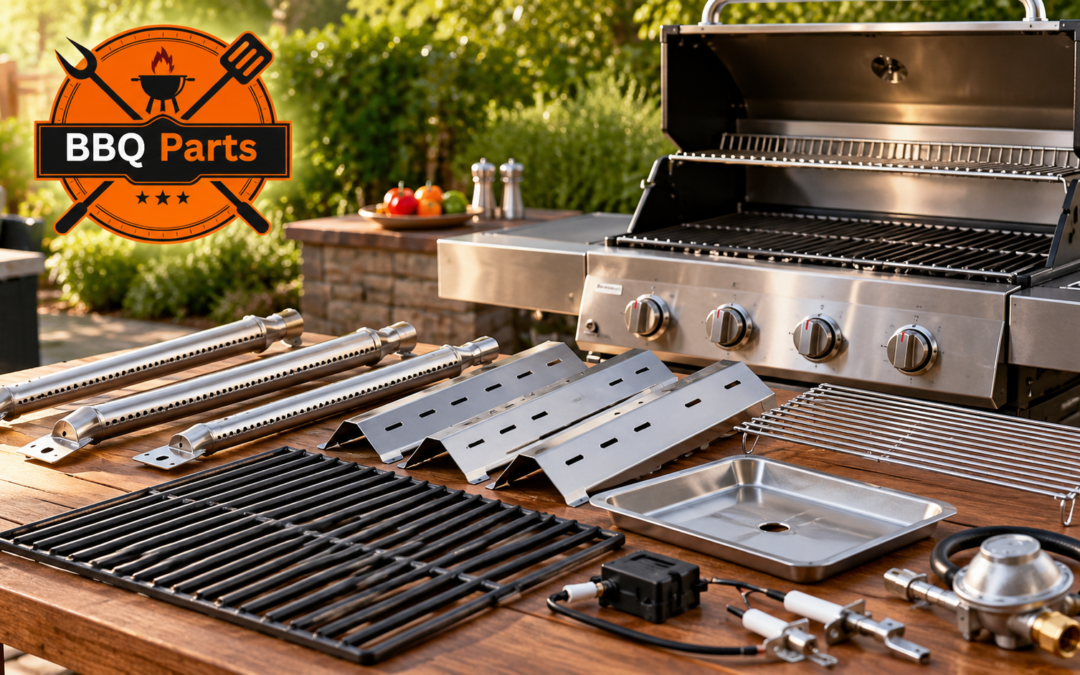
A BBQ grill can provide years of outdoor cooking, but individual components eventually wear out. Burners can rust, cooking grates can deteriorate, heat plates can become damaged, and igniters may stop working. The good news is that you often don’t need to replace the entire grill.
Choosing the right BBQ grill replacement parts can help restore your grill’s performance and extend its usable life.
Why Replace BBQ Grill Parts Instead of the Entire Grill?
Replacing one worn component can be a practical alternative to buying a new grill. Many grill problems are caused by individual parts rather than the complete grill.
Common replacement parts include:
- Grill burners
- Cooking grates
- Heat plates and heat shields
- Igniters
- Burner covers
- Gas valves
- Regulators and hoses
- Warming racks
- Drip trays
- Grill covers
- Replacement parts for popular grill brands
Before purchasing a replacement, identify the exact component that is damaged and confirm that the new part is compatible with your grill.
1. Start With Your Grill Model Number
The easiest way to find the correct BBQ replacement part is to locate your grill’s model number.
Depending on the manufacturer, the model or identification label may be located:
- Inside the grill cabinet
- Behind the control panel
- On the rear of the grill
- Under the grill
- Near the grease tray
- On the manufacturer’s information plate
Write down the complete model number. Even grills that look almost identical can use different burners, grates, valves, or heat shields.
2. Measure the Original Part
If you cannot find the model number, measurements can help you identify a compatible replacement.
Measure:
- Length
- Width
- Depth
- Diameter
- Mounting-hole locations
- Bracket positions
For parts such as cooking grates and heat shields, accurate dimensions are particularly important.
Do not select a replacement simply because it looks similar. Correct dimensions and mounting points are important for proper fit.
3. When Should You Replace Grill Burners?
Burners are one of the most important components of a gas grill. They distribute gas and create the flame used for cooking.
Signs that a burner may need replacement include:
- Uneven flames
- Weak flames
- Burner holes becoming blocked
- Heavy rust or corrosion
- Visible cracks or burn-through
- Difficulty maintaining consistent heat
A damaged burner can affect cooking performance and should be inspected before continued use.
When choosing replacement grill burners, compare the original burner’s length, shape, mounting points, material, and connection style.
4. When Do Grill Heat Plates Need Replacement?
Heat plates, heat shields, flame tamers, and similar components sit above the burners. They help distribute heat and protect burners from grease and food drippings.
Consider replacing a heat plate when it has:
- Severe rust
- Holes or burn-through
- Significant warping
- Broken mounting points
- Heavy deterioration
A replacement heat plate should match the dimensions and mounting configuration of the original component.
5. Choosing Replacement Cooking Grates
Cooking grates are directly exposed to food, heat, grease, and moisture.
Signs that your BBQ grill grates may need replacement include:
- Heavy rust
- Broken sections
- Cracks
- Excessive corrosion
- Coating deterioration
- Difficult-to-clean surfaces
When selecting new grates, check the grill model and measure the existing cooking surface. Stainless steel and other grate materials can have different durability and maintenance characteristics.
6. What If Your Grill Will Not Ignite?
If your gas grill is not lighting, the ignition system may require inspection.
Possible components include:
- Igniter
- Ignition electrode
- Ignition wire
- Battery
- Ignition module
Do not automatically assume the igniter is the problem. Check the complete ignition system and follow the manufacturer’s safety instructions before replacing components.
7. OEM vs. Aftermarket BBQ Replacement Parts
When shopping for BBQ replacement parts, you may encounter OEM and aftermarket options.
OEM parts are made or specified by the original manufacturer. Aftermarket parts are produced by other manufacturers and may be designed to fit particular grill models.
Regardless of the type you choose, check:
- Grill brand
- Model number
- Part number
- Dimensions
- Mounting points
- Fuel type
- Product specifications
Compatibility should be confirmed before purchasing.
8. Popular BBQ Replacement Parts to Keep in Mind
Some grill components experience more wear than others.
Commonly searched replacement categories include:
Burners: Replace when they become heavily corroded, damaged, or produce inconsistent flames.
Heat Plates: Replace when rust, holes, or deterioration prevent proper heat distribution.
Cooking Grates: Replace when they are severely rusted, cracked, or damaged.
Igniters: Inspect when the grill fails to ignite properly.
Drip Trays: Replace damaged or heavily deteriorated trays to maintain easier grill maintenance.
Warming Racks: Replace broken or severely corroded racks.
9. How to Find the Correct BBQ Replacement Part
Before placing an order, use this simple checklist:
Step 1: Identify your grill brand.
Step 2: Find the model number.
Step 3: Identify the damaged component.
Step 4: Measure the original part.
Step 5: Compare the dimensions and mounting points.
Step 6: Check the replacement part’s compatibility information.
Step 7: Review the product specifications before ordering.
Taking a few minutes to verify these details can help prevent ordering the wrong replacement.
Keep Your Grill Cooking for Longer
A damaged grill does not always mean it is time for a new grill. Replacing worn components can help restore cooking performance and keep your outdoor cooking setup useful for longer.
Whether you need BBQ grill replacement parts, replacement burners, heat plates, cooking grates, igniters, or Weber replacement parts, identifying the correct component is the first step.
For U.S. grill owners looking for replacement parts and BBQ accessories, visit BBQReplacementPart.com to explore available options and find the right part for your grill.
Frequently Asked Questions
How do I know which BBQ replacement part I need?
Start by finding your grill’s brand and model number. Then identify the damaged component and compare its dimensions and mounting points with the replacement.
Can I replace only one grill part?
Yes. If only one component is damaged and compatible replacement parts are available, you may be able to replace that individual component instead of the entire grill.
How do I find my grill model number?
Check the manufacturer’s identification label. It may be located inside the cabinet, behind the control panel, on the rear of the grill, underneath the grill, or near the grease tray.
Are BBQ grill replacement parts universal?
Not all grill parts are universal. Burners, grates, heat plates, valves, and other components can vary by brand and model. Always verify compatibility before ordering.
Should I measure my old grill part?
Yes. If the model number is unavailable, measuring the existing component can help you compare potential replacement parts. Dimensions and mounting points are particularly important.