
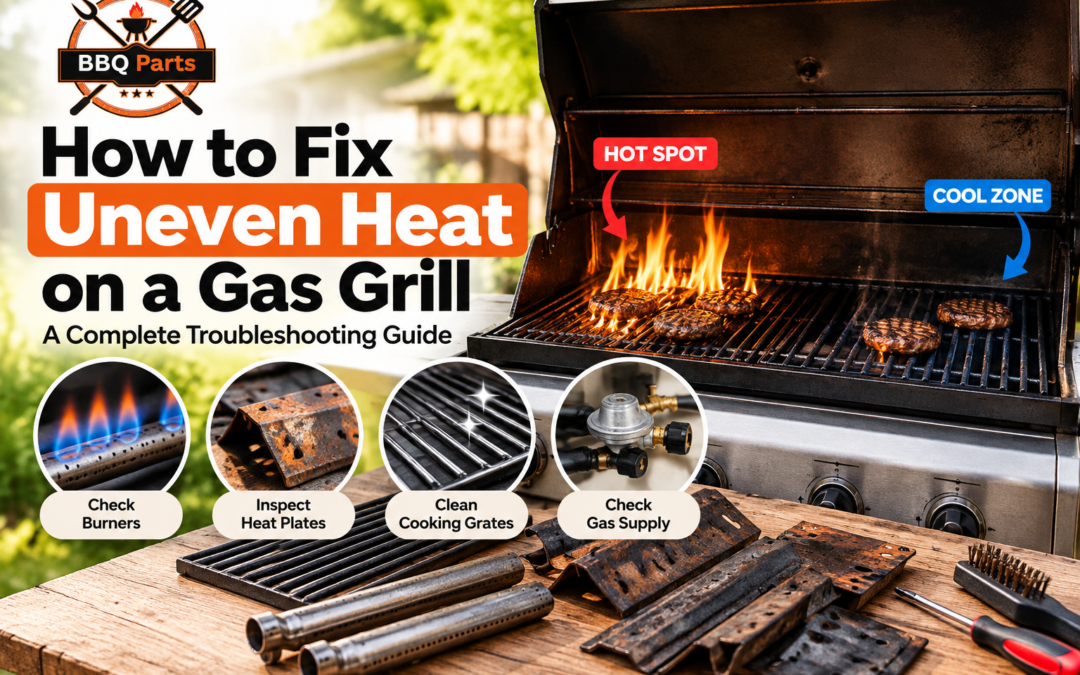
A gas grill should provide consistent heat across the cooking surface, but many grill owners eventually notice that one side cooks faster than the other. One area may become extremely hot while another stays relatively cool. This uneven heating can make it difficult to cook burgers, steaks, vegetables, chicken, and other foods properly.
Fortunately, uneven heat does not always mean you need a new grill. In many cases, the problem can be identified and corrected by checking a few important components.
In this guide, we explain the common causes of gas grill uneven heating, how to troubleshoot the problem, and when replacing a grill part may be the right solution.
What Causes Uneven Heating on a Gas Grill?
Several components work together to distribute heat throughout a grill. If one of these parts becomes damaged, blocked, worn, or incorrectly positioned, the cooking temperature can become inconsistent.
Common causes include:
-
Blocked burner ports
-
Damaged or worn burners
-
Incorrectly positioned heat plates
-
Grease and food buildup
-
Damaged flame tamers
-
Poor gas flow
-
Unevenly positioned cooking grates
-
Wind affecting the flame
-
Aging grill components
Identifying the actual cause before buying replacement parts can save money and prevent unnecessary repairs.
1. Check the Burner Flame
The burner is one of the first components to inspect when your grill develops hot and cold areas.
A healthy gas grill burner should produce a relatively consistent flame along its ports. If the flame is strong in one section but weak or absent in another, the burner may be clogged or damaged.
Turn the grill off and allow it to cool completely before inspecting the burner.
Look for:
-
Blocked burner holes
-
Rust
-
Cracks
-
Corrosion
-
Irregular flame patterns
-
Physical deformation
If the burner is severely corroded or damaged, cleaning may not solve the problem. A compatible gas grill burner replacement may be necessary.
2. Inspect the Heat Plates or Flame Tamers
Heat plates, flame tamers, and heat shields sit above the burners and help distribute heat across the cooking chamber.
Over time, these components can become:
-
Covered with grease
-
Rusted
-
Warped
-
Cracked
-
Burned through
A damaged heat-distribution component can create concentrated hot spots instead of spreading heat evenly.
Before replacing one, check your grill’s model and dimensions carefully. Replacement parts should fit correctly and sit in the intended position.
3. Clean the Cooking Grates
Sometimes the problem is simpler than it appears.
Heavy grease, carbon, and food residue can build up on cooking grates. Thick buildup may interfere with heat transfer and make certain areas of the grate behave differently from others.
After the grill has cooled:
-
Remove the cooking grates.
-
Clean away loose debris.
-
Scrub suitable grate surfaces with an appropriate grill brush.
-
Remove heavy grease buildup.
-
Reinstall the grates correctly.
Regular cleaning can help maintain more predictable cooking performance.
4. Look for Blocked Burner Ports
Grease and debris can enter or accumulate around burner openings. When some ports become restricted, the flame may not spread evenly.
Never attempt to clean a burner while the grill is operating.
Once the grill is completely cool, inspect the burner carefully. If the ports are blocked, follow the manufacturer’s recommended cleaning procedure.
Avoid enlarging burner holes or modifying the burner because changing the original design can affect flame performance and safety.
5. Check the Gas Supply
Uneven heat can sometimes be related to gas flow rather than the cooking surface.
If the entire grill appears weaker than usual, check:
-
Whether the propane tank contains sufficient fuel
-
Whether the gas connection is secure
-
Whether the regulator is functioning correctly
-
Whether the gas hose shows visible damage
-
Whether the manufacturer’s recommended startup procedure is being followed
If you suspect a gas leak or a faulty gas system, stop using the grill and have the equipment inspected by a qualified professional.
6. Test for Hot Spots
A simple temperature test can help identify where the grill is producing excessive or insufficient heat.
With the grill operating normally and safely, observe temperature differences across the cooking surface using a suitable grill thermometer or other manufacturer-approved method.
Divide the cooking surface into several sections and compare the readings.
For example:
| Grill Area | Temperature Observation |
|---|---|
| Left side | Very hot |
| Center | Moderate |
| Right side | Cool |
If one section consistently performs differently, inspect the burner and heat-distribution components directly below that area.
This can help you identify which component may need cleaning, repositioning, or replacement.
7. Check the Position of Your Grill Parts
Replacement components must be installed in their correct positions.
A heat plate sitting too close to a burner, a cooking grate installed incorrectly, or a flame tamer placed in the wrong location can affect heat distribution.
After cleaning or replacing parts, verify that:
-
Burners are properly seated
-
Heat plates are correctly positioned
-
Cooking grates are sitting level
-
No component is blocking the intended gas or airflow path
-
Parts match the grill’s design
Always follow the grill manufacturer’s installation instructions.
When Should You Replace a Grill Part?
Cleaning is useful for removing grease and debris, but it cannot repair every component.
Replacement may be appropriate when a part has:
-
Significant rust
-
Cracks
-
Holes caused by corrosion
-
Warping
-
Broken mounting points
-
Severe deterioration
-
Persistent performance problems after cleaning
Common replacement components include burners, heat plates, flame tamers, cooking grates, igniters, grease trays, and other grill-specific parts.
Before ordering anything, confirm the grill brand, model number, dimensions, mounting configuration, and compatibility.
Why Correct Replacement Parts Matter
A grill component may look similar to another part without actually being compatible.
Using the wrong replacement part can result in poor performance or installation problems.
When searching for BBQ replacement parts, compare the replacement component with the original part and verify the specifications before purchasing.
The correct part should be designed for the specific grill or model family whenever possible.
How to Prevent Uneven Heating in the Future
Preventive care can reduce the chance of heat-distribution problems.
Consider these habits:
Clean the Grill Regularly
Remove grease and food residue before buildup becomes excessive.
Inspect Burners Periodically
Look for corrosion, blocked ports, and unusual flame patterns.
Protect the Grill
If your grill stays outdoors, use an appropriate cover and protect it from prolonged exposure to moisture.
Check Components Before Heavy Use
Before a large BBQ gathering, inspect the burners, heat plates, grates, and ignition system.
Replace Severely Damaged Parts
Don’t continue relying on components that are heavily corroded or structurally damaged.
Frequently Asked Questions
Why does my gas grill get hotter on one side?
Uneven heating can result from blocked or damaged burners, worn heat plates, poor gas flow, or other heat-distribution problems.
Can dirty burners cause uneven heat?
Yes. Grease and debris can interfere with burner ports and produce an inconsistent flame pattern.
Should I replace my entire grill if it has hot spots?
Not necessarily. If the grill body and major components are still in good condition, replacing a damaged burner or heat-distribution component may restore performance.
How do I know which replacement part I need?
Start with the grill’s manufacturer and model number. Then compare the dimensions, mounting points, shape, and specifications of the replacement component with the original.
How often should I inspect my grill?
A quick inspection before regular use is a good habit, while a more detailed inspection can be performed periodically depending on how frequently the grill is used.
Final Thoughts
Uneven heat does not automatically mean your gas grill has reached the end of its life. By checking the burners, heat plates, cooking grates, gas supply, and other components, you can often identify the source of the problem.
The key is to diagnose the issue before purchasing a replacement. Once you know which component is causing the problem, choosing the correct BBQ replacement part can help restore consistent cooking performance and extend the useful life of your grill.
For grill owners looking for compatible replacement components and BBQ accessories, explore the available options at BBQReplacementPart.com.